▪︎ Remove bad luck
▪︎ Remove misfortune
▪︎ Remove Sexual Soul-Ties
▪︎ Remove Negative Energy
▪︎ and much more (Only $100)
📍 Chicagoland
708.477.8215 ▪︎ hoodooeducation@gmail.com
▪︎ Remove bad luck
▪︎ Remove misfortune
▪︎ Remove Sexual Soul-Ties
▪︎ Remove Negative Energy
▪︎ and much more (Only $100)
📍 Chicagoland
708.477.8215 ▪︎ hoodooeducation@gmail.com
Each individual African American reserves the right to celebrate or confront the 250th year of America’s founding.
When I think about the founding of the United States of America, I think about High John de Conqueror telling enslaved African Americans they’d be Emancipated 100 years before the Emancipation Proclamation.
I think about enslaved African American Muslim patriots who fought in the American Revolutionary War against the British. These are their names: Yusuf ben Ali. Bampett Muhamed. Peter Salem (Salaam). Joseph Saba. Francis Saba.
I think about the 1st American to be killed in the founding of the United States of America, a Black man named Crispus Attucks!
…and yes, I’m fully aware of Frederick Douglass “What to the Slave Is the Fourth of July?” speech delivered on July 5, 1852, at Corinthian Hall in Rochester, New York. I’m also fully aware of Frederick Douglass meetings with Abraham Lincoln regarding Emancipation of enslaved African Americans as well as African American soldiers fighting in the Civil War:
August 10, 1863: Douglass met Lincoln in the Executive Mansion to advocate for the equal pay of Black soldiers and protection for Black prisoners of war.
August 19, 1864: Lincoln summoned Douglass to discuss a contingency plan for helping enslaved people escape to the North in the event the Union lost the war.
March 4, 1865: Douglass attended Lincoln’s second inauguration and later met him at an inaugural reception, where Lincoln personally asked for his opinion on the speech.
Frederick Douglass also recruited African Americans to fight in the Civil War, of whom two of his sons fought in the Civil War: Lewis Henry Douglass and Charles Remond Douglass fought for the Union.
I think about Sojourner Truth, she met with President Abraham Lincoln at the White House on October 29, 1864 and thanked him for his efforts in freeing enslaved African Americans.
I think about Harriet Tubman returning to the South 13 times to rescue enslaved African Americans. She led 100s of enslaved African Americans to freedom. She served in the Civil War (Union Army) as a spy and led an attack on the Confederate Combahee River Raid in South Carolina on June 2, 1863 which freed over 800 enslaved African American women, men and children. Harriet Tubman was posthumously commissioned as a one-star Brigadier General in the Maryland Army National Guard on November 11, 2024 (Veterans Day).
I think about Black Freemasons of whom have been on this soil since 1775 fighting against slavery, racism and civil rights.I think about Black Freemasons along with other Black leaders meeting with President Abraham Lincoln on August 14, 1862 and rejecting his proposal to move enslaved African Americans to the Chiriquí region of what is now Panama. Among the many things discussed, they told President Lincoln “Our people are buried in this soil”.
I think about the 20 some odd Black ministers when asked by President Abraham Lincoln “What do your people want?” They responded “We want land to feed and house ourselves”. Thus, newly freed African Americans were allotted up to 40 acres and later broken down mules used in the Civil War. The order was called Special Field Orders No.15 issued by General William T. Sherman and War Secretary Edwin Stanton.
I think about all of the intelligent Black leaders produced by Black Greek organizations. Leaders who also fought against legal segregation, racism, and inequality.
I think about the work of Noble Drew Ali and The Moorish Science Temple of America pushing us to a mentality of discipline, justice and sovereignty.
I think about The Honorable Elijah Muhammad and the Nation Of Islam fighting to give us dignity, self-respect (DO FOR SELF), and a name that wasn’t a European slave owner’s name.
Of course I also think about the blood sacrifice of Medgar Evers, Minister Malcolm X, Rev. Dr. Martin Luther King Jr., and Fred Hampton.
I think about all of those who made the 1963 March On Washington and the 1995 Million Man March possible.
I think about the rise of the United States of America’s 1st Black President, Barack Obama. I think about our 1st Black Vice President Kamala Harris.
Simply put, African Americans made the United States of America better for everyone. Our people fought in every war this country ever had. It is because of African Americans we have the 13th, 14th and 15th Amendments to the U.S. Constitution. Our contributions and sacrifices to the 13 Colonies as well as the United States of America is immeasurable!
So rather you decide to celebrate or confront, it’s your prerogative. Just keep in mind our people died for us to receive ALL of the benefits of being an American citizen, and we ain’t giving that up for no got damn body!
We built this Country 🇺🇸 —Elder Jim Allen
Below are some of my favorite Blues Hoodoo songs. This is Hoodoo conjure at its finest. Hoodoo is a mixture of West/Central African spirituality. It was formed by enslaved African Americans in North America during slavery in the 1600s. Hoodoo is older than the founding of the United States of America. Hoodoo is older than the establishment of the Black church. In fact, Hoodoo is the Great Grandmother of the Black church, yet Hoodoo is not Christianity. Have a listen to these wonderful songs below:
Please watch the below video:
Please watch the video below:
Please watch the video below:
It is known by scholarly research that Harriet Tubman practiced Hoodoo. She is known to have been a root worker and conjurer. However, most don’t know her father Ben Ross was also a Hoodoo practitioner. His Hoodoo spirit cache was found a few years ago.
In 2021, archaeologists excavated the home site of Ben Ross in Maryland. Interestingly, just a couple of years later in 2024, on a neighboring section of the same historic Thompson plantation, archaeologists discovered a “West African spirit cache” beneath a home.
Via Gemini (Google):
In Hoodoo and early American history, Peter the Doctor (sometimes referred to as Peter Doctor) was a free African conjurer and practitioner of Hoodoo/conjure who played a central role in the New York Slave Revolt of 1712.
Here are the key historical details about him:The 1712 Revolt: In April 1712, a group of over twenty enslaved Africans revolted in downtown colonial New York, setting fire to buildings and fighting against their captors.
The Magic Powder: As a leader and spiritual authority of the uprising, Peter the Doctor created a traditional, protective magical powder. He instructed the revolutionaries to rub this powder on their bodies and clothing, a ritual meant to grant them psychological empowerment, physical strength, and spiritual protection during the rebellion.
Historical Significance: His involvement is one of the earliest documented accounts of Hoodoo and traditional African rootwork being actively used as a tool for resistance and liberation against slavery in North America.
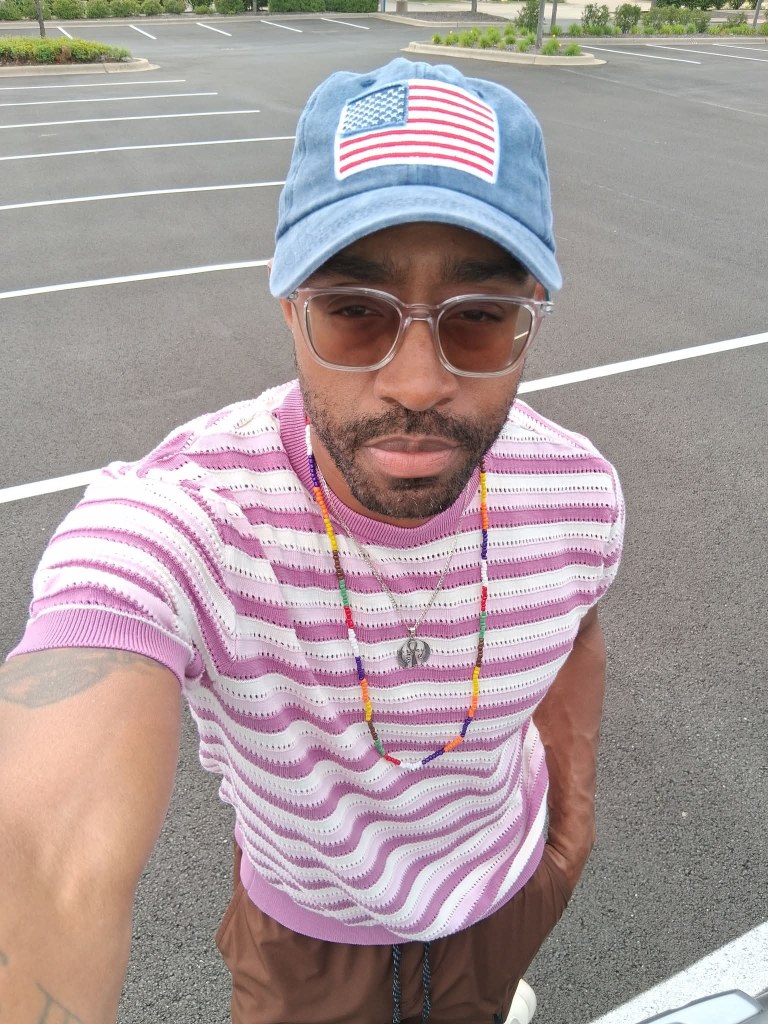
Above picture of Elder Jim Allen
Via: Gemini (Google)
Yes, Hoodoo (also known as Rootwork or conjure) was absolutely practiced during the era of chattel slavery in the United States. In fact, it was born directly out of that experience.
Enslaved Africans brought diverse spiritual, medicinal, and cosmological traditions from various regions—primarily West and Central Africa (such as the Bakongo, Yoruba, and Fon cultures).
Forced into the brutal environment of American plantations, they blended these traditions with Native American herbal knowledge and elements of European folklore and Christianity to create a unique, localized system of spiritual resistance and healing.Here is how Hoodoo functioned during slavery:
1. A Tool of Resistance and ProtectionHoodoo was not just a passive belief system; it was actively used to navigate and resist the violence of slavery. Practitioners created amulets, charms, and spiritual boundaries to protect themselves from overseers, prevent family separation, or avoid physical punishment.
The Mojo Bag: Also called a gris-gris or conjuring bag, this was a small flannel pouch filled with specific roots, herbs, graveyard dirt, and personal items. It was worn secretly to draw luck, protection, or courage.
Chewing John the Conqueror Root: Enslaved people would secretly chew High John the Conqueror root (the root of Ipomoea jalapa) when facing a master or overseer. They believed it would give them psychological dominance, smooth over a conflict, or prevent them from being whipped.
2. Physical and Spiritual HealingBecause enslaved people were routinely denied adequate medical care, Hoodoo practitioners acted as the community’s doctors and midwives. They possessed an intimate knowledge of local flora and fauna, using roots and herbs to treat everything from fevers to infections. In Hoodoo, physical healing and spiritual cleansing were inextricably linked—illness was often seen as a disruption of spiritual balance.
3. Historical Examples of ResistanceHoodoo played a documented role in several major slave revolts and escape attempts:Gullah Jack (1822): In the Denmark Vesey slave conspiracy in Charleston, South Carolina, a co-conspirator named Gullah Jack was a well-known Angolan conjurer. He distributed protective charms and a specific diet to the rebels, promising that Hoodoo magic would make them invulnerable to the militia’s bullets.
Frederick Douglass: In his famous autobiography, Douglass describes a low point in his life when he was being brutally beaten by a “slave-breaker” named Edward Covey. A fellow enslaved man named Sandy Jenkins gave Douglass a specific root to carry in his right pocket. While Douglass was initially skeptical, when he returned to the plantation, he found the courage to fight Covey hand-to-hand, winning the fight and ensuring he was never beaten again. Douglass noted that the root, or the psychological power it provided, completely altered his situation.
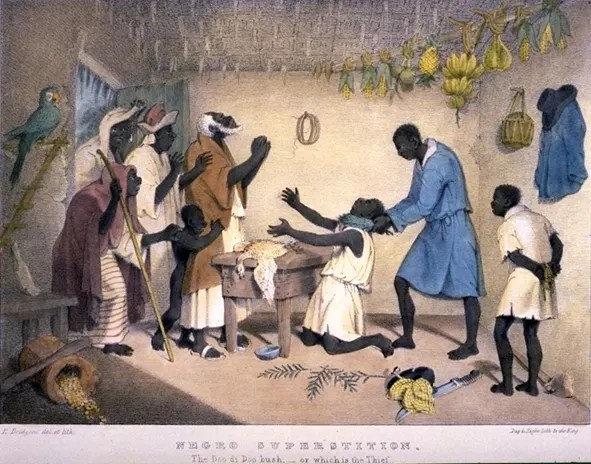
4. Secrecy and SurvivalBecause slaveholders feared the unifying power of African spiritual traditions—and rightly suspected that “conjure” could be used to poison masters or spark rebellions—practicing Hoodoo was strictly forbidden. Practitioners operated in deep secrecy, often meeting late at night in the woods (sometimes called “hush harbors”) to perform rituals, lay tricks, or pray.
Through this adaptive secrecy, Hoodoo survived the abolition of slavery and continues to be practiced as a distinct African American spiritual tradition today.
Please be sure to donate to Hoodoo Nation. Our mission is to provide inspiration and information about Hoodoo from an historic perspective. Your donation of $5 helps us do the aforementioned. Thank you kindly for your support.

 Elder Jim Allen